Osage headright system
Killers of the Flower MoonThe Osage headright system joined collective mineral ownership to individual inheritance: after the Osage negotiated to reserve the minerals beneath their land, enrolled members received shares in the mineral trust whose value rose with oil production. Headrights could not be bought or sold, only inherited. That rule helped preserve the Osage Nation’s control of its underground reservation, but it also made inheritance the legal path by which wealth could pass from one person to another—and, in the murders of Mollie Burkhart’s family, a path investigators believed William K. Hale sought to exploit.
Origins and Structure
As the federal government moved to break up Indian Territory and create Oklahoma, George Bigheart and John Palmer negotiated with government officials over the terms of allotment. The Osage secured a larger individual land allotment than the standard 160 acres, and, more consequentially, reserved the oil, gas, coal, and other minerals under the land to the tribe. The reservation protected resources the Osage knew existed, although few then imagined the scale of the fortune beneath them. In 1906, the agreement was enacted; when Oklahoma entered the Union the following year, tribal members could sell their surface land, but no one could buy or sell a headright. A headright represented a share in the tribe’s mineral trust and could pass only by inheritance.
The distinction between surface land and the mineral estate created what the book calls the first underground reservation. The surface could change hands while the mineral interest remained under tribal control. The headright system therefore did more than distribute oil income: it carried forward the Osage claim to wealth underground, even as development above ground increasingly involved outside prospectors and businesses.
Oil Revenue and Unequal Control
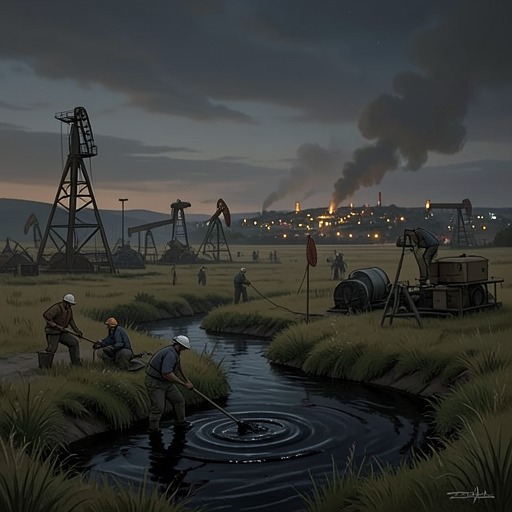
As the Osage leased land to prospectors, drilling transformed the value of the mineral trust. In 1917, a well on Lot 185 near Lot 50 erupted into a column of oil; in 1920, E. W. Marland discovered the Burbank field, where a new well produced 680 barrels in its first twenty-four hours. Lease auctions, held roughly four times a year under the Department of the Interior, drew oilmen to Pawhuska to bid on tracts that typically covered 160 acres. The spectacular rise in bids made the mineral estate a source of enormous revenue—and a focus of local power and competition.
A headright’s economic value did not mean its holder could freely direct the money it generated. Federal officials classified many Osage as unable to manage their own affairs and required guardians to oversee their spending. Those decisions were often based on blood quantum: full-blooded Osage were routinely assigned guardians, while mixed-blood people rarely were. In 1921, Congress imposed further restrictions on members with guardians, limiting how much they could withdraw each year from their trust funds, even for education or medical needs. Mollie, as a full-blooded Osage, was among those whose funds were restricted; her husband, Ernest Burkhart, served as her guardian.
This arrangement placed control over income in the hands of people who might have interests opposed to the headright holders. Tom White’s investigation found that guardians and administrators could overcharge their wards, steer them to businesses for kickbacks, claim to buy property for them while acquiring it for themselves, or steal outright. One government study estimated that guardians had taken at least $8 million directly from restricted Osage accounts before 1925. The system’s formal purpose was protection; in practice, its concentration of authority could turn management into an opportunity for exploitation.
Inheritance and the Murder Plot
Because headrights could not be transferred through a sale, inheritance had particular importance in White’s reconstruction of the killings. He examined probate records and saw that successive deaths in Mollie’s family directed more headrights toward her. Anna Brown, who had divorced and had no children, left nearly all her wealth to her mother, Lizzie. Lizzie in turn willed most of her headright to her surviving daughters, Mollie and Rita. White came to see the order of the deaths not as haphazard but as a sequence that could concentrate family wealth through inheritance.
The bombing that killed Rita Smith and her husband, Bill Smith, had consequences shaped by their wills. If they died simultaneously, much of Rita’s headright would pass to Mollie. But Bill survived Rita by several days, inherited much of her wealth, and then, after his death, that money passed to one of his relatives. White regarded Bill’s survival as a miscalculation in a plan that otherwise sent much of the family’s headrights to Mollie.
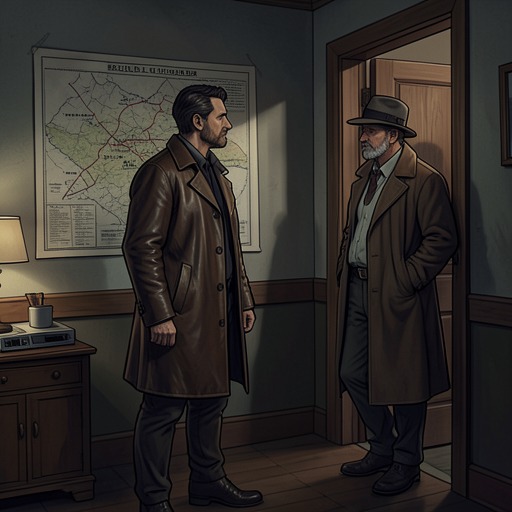
Mollie was married to Ernest, whom an agent described as controlled by Hale. White concluded that Hale had found an indirect channel to the family fortune through his nephew: the headrights accumulated by inheritance in Mollie’s hands, while Ernest controlled her wealth as guardian. White could not establish whether the marriage, which began four years before Anna’s murder, had been part of the plot from the outset or whether Hale later persuaded Ernest to betray his wife. His conclusion was an investigative theory about the pattern and its intended beneficiaries, not proof that the inheritance arrangement itself established who committed each killing.
Legal Change and Long Aftermath
After Hale and John Ramsey were convicted, the Osage Tribal Council publicly thanked White and his team. The Osage also persuaded Congress to bar anyone who was less than half Osage from inheriting a headright from a tribal member. The change made the rules of succession more restrictive, but it did not erase the system’s history: rights designed to preserve Osage mineral wealth had become central to both the family inheritance pattern and the legal response to the murders.
The value of the headright declined with the oil economy. During the Great Depression, the price of a barrel fell from more than $3 during the boom to 65 cents in 1931, and an annual headright payment fell below $800. Oil fields were gradually depleted, and boomtowns including Gray Horse dwindled. More than ten thousand wells still remained scattered across the reservation in the period described by the book, but they were generally low-producing wells; at a 2012 lease auction in Tulsa, three leases sold for less than $15,000 in total. Margie Burkhart, who inherited a little more than half a headright from her father, continued to receive quarterly payments that usually amounted to a few thousand dollars in recent years—helpful, but not enough to live on.
The underlying question of mineral rights persisted even as oil ceased to dominate the landscape. In 2015, the Osage Nation opposed a wind farm built across more than eight thousand acres, arguing that excavation of limestone and other minerals for turbine foundations required its approval under the 1906 agreement. A court sided with Enel, finding that the company had not marketed, sold, or otherwise developed minerals and therefore did not need a lease. The dispute showed how the reservation’s old division between surface use and mineral rights continued to shape new development. The headright system endured not as a simple record of oil payments, but as part of a longer struggle over who controlled the resources beneath Osage land and who had the authority to benefit from them.